
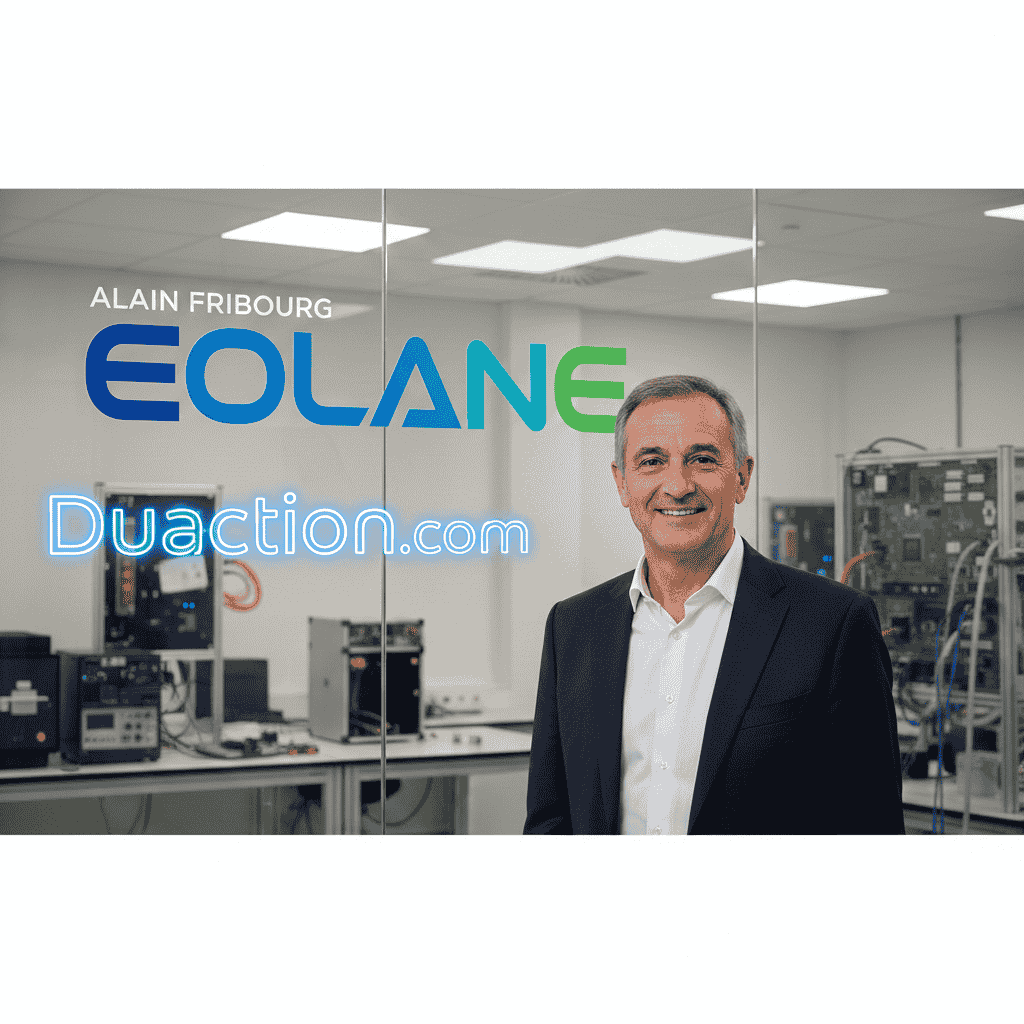
The electronics industry in France has always been a bastion of innovation and precision, and over the past few decades, great giants have played with each other to define the course of it. I mentioned Éolane among them as also a EMS and ODM powerhouse. Though the company is collective alain fribourg eolane among all others is at its helm and set out to be who would shape it .
In order to understand the connection between Alain Fribourg and Éolane you have to consider the wider context the development of the company. It’s looking at how a regional business evolved into a conglomerate with investments around the world and the strategic moves that contributed to where it stands today. This article lays out the evolution of Éolane; how it grew through strong leadership, making all the right moves to position itself a unique and very competitive player in professional electronics game.
The birth of Éolane Local roots, a global outlook of alain fribourg eolane
Éolane wasn’t the giant it is today. It was originated in Combrée, France as local initiative for creating employment and industry. Through a combination of strategic acquisitions and organic growth, over almost 50 years the company grew from a small business to become one of the leaders on French EMS market.
A History of Strategic Expansion
The history of the company is one of a “federation of SMEs”. Éolane grew by and large not through constructing a monolithic corporation, but rather through absorbing several smaller businesses with specific technical competencies in various industries. This helped the group gain a wide tech stack from R&D and prototyping to mass production and product support.
By the 2000s and 2010s Éolane has subsequently become a leading European actor. It then spread, not only across France, but also to locations in Germany, Morocco (see MZABI), Estonia and China. That internationalization was key for serving worldwide customers and keeping competitive in a price-sensative industry.
Alain Fribourg: Steering the Ship
Alain Fribourg is a key character in the story of the Fribourg family’s relationship with French industry. Having long wielded power over the group’s larger governance and strategic scope during expansion periods (in addition to the Fribourg family), he contributed to creating a longer-term vision, including resilience within culture.
Leadership Style and Contributions
“Éolane has always been a company in which leadership connected technical expertise with market potential. Key aspects emphasized during the phases of Fribourg family influence were:
- Decentralisation: giving autonomy to local affiliates while being able to rely on the entire group Commercial power_strength.
- Expansion: Not just contract fabrication, offering added value (ODM) services and original products.
- Customer Intimacy: Retaining close links with cutomers in key sectors of defense aerospace health and rail.
The Alain Fribourg era and impact are meventually associated with rationalisation periods the main objective of which was to organise group finances and operations in such a way as to withstand economic storms while anticipating technological breakthroughs.
Disaggregating the Business Model: EMSs, and ODMs.
Éolane has a twin-business model which is based on the following strengths: End-market protection, Resilient foundation. Whereas competitors mainly concentrate on manufacturing to print (producing precisely what the client designs), Éolane markets itself as a partner from the inception of a product until its discontinuation.
Electronic Manufacturing Services (EMS)
That is the heart of the business. Éolane produces electronic cards and sub-assemblies for external customers. On this ground they are equivalently competent:
- Sourcing and procurement: Using global purchasing power to get parts.
- Assembly: SMT and THT.
- Tested: Simple plug and play, no need to do any testing after installation.
Original Design Manufacturing (ODM)
In order to win higher margins and engender customer dependence, Éolane extended into the ODM world. That could mean developing products for clients or devising proprietary technology platforms (such as IoT sensors) that clients can use in their own branded form. This change enables Éolane to support its clients from the concept phase compared to only from the production phase.
Key Products and Services
The company’s customers are in closely regulated and exacting industries. Key offerings include:
- Health: Medical devices, diagnostic tools and patient-monitoring systems.
- Mobility: Traffic signal system, car electronics, aviation control.
- Industry 4.0: IIoT sensors for Predictive Maintenance, Smart Metering etc
- DEFENCE: Ruggedised electronics up for the extreme.
Navigating Challenges and Seizing Opportunities
It means that, with a competent leadership, Éolane faced an intricate series of hurdles which were shared by all western manufacturers.
The Challenge of Globalization
Among the biggest barriers has been competition from low-cost production centers in Asia. Leadership needed a good reason to keep making cars in France and Europe. The High Mix, Low Volume share plan applied. Rather than try to win the race in mass-market consumer electronics (where China is dominant), Éolane targeted its high-quality and close-proximity offering to complex, high-reliability production runs with small volumes where quality underpins everything while price isn’t bottom rock.
Supply Chain Volatility
The recent global shortage of semiconductors has made clear the fragility of electronic supply chains. The longer lead times on some components – over 50 weeks in a few cases – were a major headwind for Éolane. Leadership had to switch to more agile procurement practises, redesign products that could be made using available parts and build closer ties with distributors.
Opportunities in the IoT Era
The emergence of the internet of things (IoT) was a huge opportunity. Éolane drew up a full range of IoT offers (under the Bob Assistant brand and others) in record time. By casting themselves as enablers of the smart factory and smart city, they unlocked new revenues beyond conventional subcontracting.
Also read: Starhoonga: Bridging the Gap Between Future Tech and Reality
Market Position and Competitive Landscape
Éolane is no lightweight amongst Europeans. It is regularly positioned in the top 5 EMS providers in France and has been ranked among the top 20 in Europe.
The Competition
The landscape is bifurcated. On one side are the global goliaths like Foxconn, Jabil and Flex that rule high-volume consumer electronics. On the other end are players that are more niche local. With its footprint, Éolane has strategically positioned itself in the “Tier 2” middle ground: large enough to provide global scale and financial stability, yet nimble enough to offer personal service and flexibility.
Some key players operating in the water quality monitoring system market include:
- Lacroix Electronics: A fellow French giant with the same profile.
- Asteelflash – now part of USI, big competition from a global logistics perspective.
- Zollner: The German giant that rules across DACH.
What has always set Éolane apart was its “multi-domestic” approach—opening factories near clients’ R&D centers, so that prototype and iterations can move quickly.
Financial Performance and Metrics
Although private companies frequently do not disclose to such granular levels of detail, Éolane has had a stormy financial path, growing revenues at great speed and then reorganization for profitability.
The group has historically generated much turnover, in some years more than €300 million. But high margins in the EMS industry do not necessarily mean high profit since material is very thin margin.
In Fribourg style and post Fribourg management, an attempt was made to push up EBITDA. This was achieved by:
- Footprint Rationalization: Closing / consolidation of underperforming sites.
- Execution Excellence: Applying Lean Manufacturing ideas to all plants.
- Reposition Sales: Disengagement from low margin contracts to concentrate on strategic clients in value add sectors.
Innovation and Technological Advancements
Innovation at Éolane isn’t necessarily about making things faster; it’s about making them smarter. The company is also very R&D heavy, in some cases reinvesting percent of its tunover into innovation centers.
Corton Initiative and Digital Services
As it understands hardware is being commoditised, Éolane has also rolled out digital services. That includes the data management platforms for their IoT gadgets. They enable industrial customers to purchase more than a sensor, but actually to buy the vibration monitoring service that predicts when a machine will fail.
Advanced Manufacturing Technologies
On the shop floor itself, the group has embraced Industry 4.0 technology. This includes:
- Cobots (Collaborative Robots): Collaborating with Humans for Accurate Assembly.
- Automated Optical Inspection (AOI): AI identifying soldering defects better than the human eye.
- Traceability Systems: The ability to track every single part used on a board back to its origins, mandatory in aerospace and med-tech.
Sustainability and CSR
In the current manufacturing climate, sustainability is not a choice. CSR has been integrated into the strategic plan of Éolane.
Environmental Stewardship
E-waste and energy usage are well-known side effects of the electronics industry. éolane has obtained ISO 14001 certifications on all its sites. Initiatives include:
- Eco-design: Creating products that can be easily repaired and recycled at the end of their life.
- RoHS/REACH Compliant: Meets requirements for hazardous substances.
- Energy Savings: Refurbishing old plants to lower carbon footprints.
Social Responsibility
Éolane is one of the largest employers in several regions in France and is aware of its social role. This means ensuring a commitment to gender equality in an industry that has been one of the most male-dominated sectors of the global economy and providing opportunities for employees to continuously update their skills in a field where technology is changing at breakneck speed.
The Future Outlook for Éolane
The inheritance of Alain Fribourg and the legacy carried by the history of Éolane establish strong roots, but it is with future challenges that we forge them forward. The company is already pivoting toward a model that promotes “sovereignty” in electronics, working to help Europe reclaim independence in supplying of critical technology.
The road ahead is structured around 3 pillars:
- Resilience: Bolstering supply chains from geop
- Intelligence: AI integrated into edge computing devices.
- Related: 6 eco-friendly electronic devices that help the environment Green Electronics: Leading the way in sustainable manufacturing.
Éolane is an essential gear of the European industrial machine. Respecting its legacy of engineering-led capability and reconciling it with the new, but inescapable challenges of digital transformation and environmental sustainability gives Jabil a strong platform to lead as we move forward.
Frequently Asked Questions
What does Éolane do?
Éolane – Electronic Manufacturing Services (EMS) They develop, industrialize and manufacture electronic equipment for clients within sectors such as health, defense, rail and automotive. They also provide IoT product solutions, along with product lifecycle management (PLM).
Is Éolane a French company?
Yes, Éolane has doimicile in France (with its headquaters located in the Pays de la Loire) and a vast majority of production is still based in this country but it’s also present abroad (Germany, China, Morocco and Estonia).
What is the distinction between EMS and ODM?
EMS (Electronic Manufacturing Service) refers to the conctract science of building products to a customer’s designs. ODM (Original Design Manufacturing) The factory manufactures a product that is designed the customers brand it can be. Éolane provides both services.
IoTÉolane: what value for the Internet of Things industry?
Éolane also produced its own range of Industrial IoT sensors and platform (for example the Bob’s Assistant). They work with more traditional industries to digitize their operations for predictive maintenance and asset tracking without having to build out that hardware themselves.
Who are Éolane’s main competitors?
In Europe, Éolane goes head-to-head with rivals including Lacroix Electronics, Asteelflash, Zollner and Scanfil. They go up against big boys like Flex and Jabil around the world – though Éolane is in “High Mix, Low Volume” professional electronics not high volume consumer goods.
Read More Topics on Duaction