
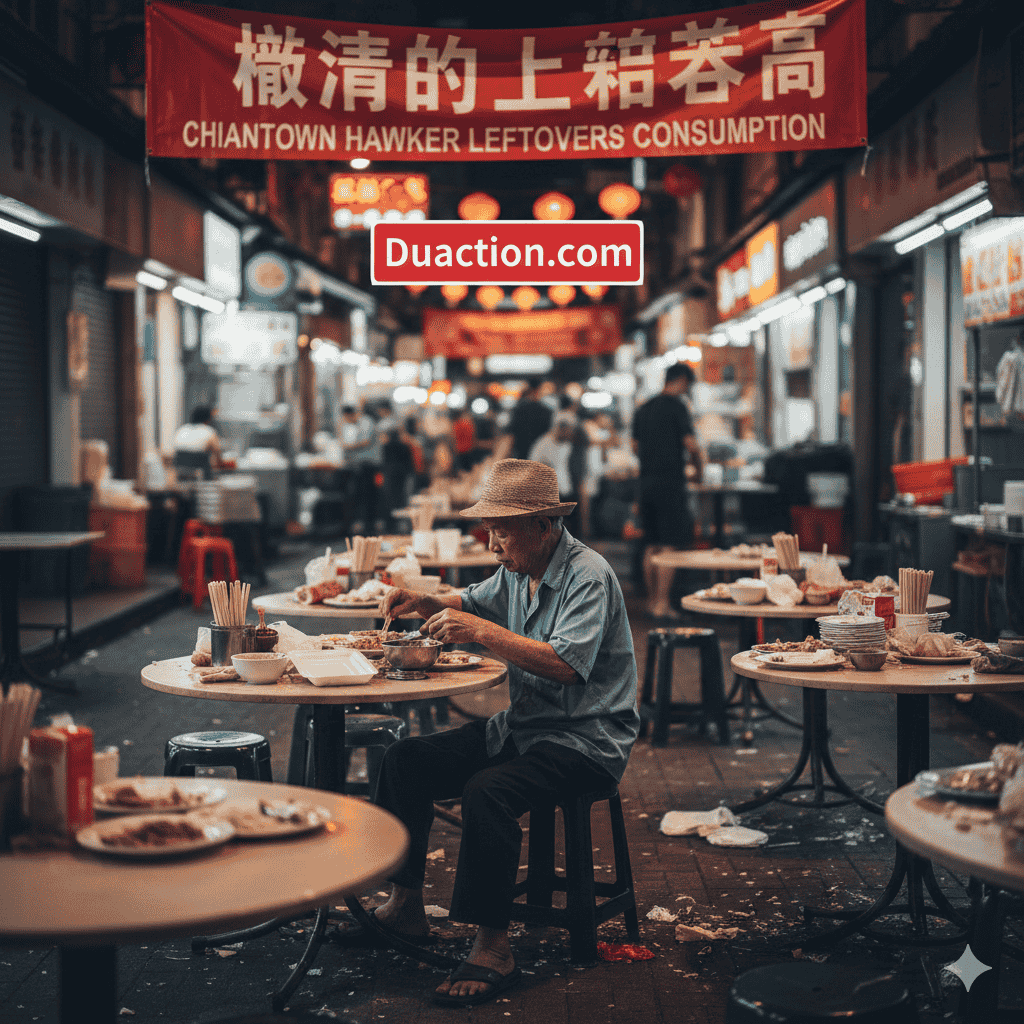
‘Lunch Is Just Lunch’ Walk through any Chinatown at lunchtime and it’s like stepping into a tornado of sights and smells. Woks sizzle, steam billows from giant pots of soup and diners huddle around tables with platters of roasted meats, plump shrimp or bowls of noodles. But underneath this flourishing scene thrives a not-so-publicised activity: food hunting for hawker stall leftovers.
It may sound a bit odd, even off-putting to some people. It includes eating food that is “expired” or unappetizing to other people. Though it may sound odd, this behavior is more widespread than many people might think and is motivated by thrift, ecological concern, necessity, even curiosity. It is a messy social phenomenon, signalling the confluence of cultural values, economic rigours and environmental awareness.
This is a guide to the weird world of chinatown hawker leftovers consumption, including its unwritten rules and safety risks, as well as why people do it in the first place. Through the lens of this practice, we can better understand some larger themes: food waste, urban poverty and what I’d call quiet courage found in communities across the globe.
Why Does Chinatown Hawker Leftovers Consumption Practice Exist?
The food-world ecosystem of a Chinatown hawker center is peculiar, the sort where it turns out that leftovers are far from unlikely. There are a number of reasons why this is the case, from cultural norms to the exigencies of running a food stall.
Saving Money and Frugality
For many, it’s about the money. The elderly, who are on fixed incomes, students and low-wage workers often depend on discount end-of-day meals from hawkers or sometimes even the untouched scraps of food left on tables. It enables them to have a hot meal in seconds, and for far less money. The mentality is frequently based on a cultural reverence for thrift, where to waste nothing is an unspoken badge of honor.
Avoiding Food Waste
A new generation of environmentally minded individuals, mostly young people, are activists through eating leftovers. They view it as a particularly straightforward way to confront the enormous volume of food that goes to waste in landfills. By diving for meals that get trashed, they say no to a culture of excess and waste.
The Tourist Factor
Chinatowns are major tourist hubs. Tourists, keen to try as much local cuisine as they can, also tend to over-order and waste unfinished or untouched plates. This makes the odd meal of high quality something that’s continually available for anyone searching for an easy free lunch. Tourists could be in a hurry, or maybe too full to keep on eating and contributing to the leftover ecosystem.
The Secret Rules of a Sex Club
Informal though it is, leftover consumption at Chinatown hawkers has its own rules of etiquette. Keeping to the letter of these unspoken rules helps preserve dignity and decorum so that the practice always remained discreet and respectful.
- Wait Until Tables Leave: Rule No. 1 is not to walk up on anybody who is still sitting at a table. Providers do not (of course) pick up any of the food until after the guests have definitely finished and left.
- Select Clean Leftovers: Ideally, you should have “clean” leftovers—food that looks untouched by spoons or partially eaten. Whole plates of noodles, untouched dumplings or entire pieces of meat would be perfect.
- Subtle: The idea is not to get noticed. The seasoned pros cut a swift and subtle path as they seem to disappear into the lively hawker center.
- No drinks: Open or semi consumed drinks are almost universally avoided as they are just stinking things to be contaminated with.
- Be Kind to Others in Need: There is a code between regulars. If someone, perhaps an unhoused person, is obvious in their need of sustenance, others will usually let him pass.
Also Read: LZ8948391235932AU: The Complete Guide to Tracking Your Parcel
Is It Safe? Food Safety Considerations
The most important thing about eating up hawker leftovers is undoubtedly, food safety. Yes, there’s a risk of food-borne illness, but the dangers can be easily managed if you follow some commonsense rules.
Temperature Danger Zone
Temperature control is the priority, food safety experts say. _ Hot foods should be held at or above 140°F (60°C), and cold foods should be held at or below 40°F (4°C). Food that’s been in the “danger zone” — between 40 and 140 degrees Fahrenheit — for more than two hours is more likely to have bacterial growth.
Reheating Instructions
If you end up with leftovers that have cooled, make sure to reheat them until steaming hot throughout. The rule is that you should heat all leftovers to 165°F (74°C) or higher to kill any dangerous bacteria. The easiest way to ensure the temperature is reached is with a food thermometer.
What to Seek and What to Shun
The first line of defense for choosing leftover food is to eyeball it and give it the sniff test.
- How to Tell Food Is Fresh: Anything with an off odor, slimy or odd texture, and/or discoloration or mold growth is a no-go.
- Safer Choices: Dryer items such as chips, bread and plain rice tend to be lower risk. You can also take more chances on dishes that remain visibly untouched.
- Foods to Avoid: Seafood, milk-based products and undercooked /raw items are risky. Soupy or saucy dishes can pose a challenge the longer they sit out. When in doubt, better to do without.
Who Participates and Why?
The stereotype may be that only the unhoused or unsheltered eat leftovers, but of course the truth is more complex. Seniors hail from all walks of life, with various reasons for participating.
- The Elderly: A new kind of catnip for an increasing number of older folks, especially those who live alone on limited pensions and collect leftovers to stretch their budgets. For them, it is literally a form of practical thinking they may have had their whole lives.
- Tree-Hugging Youth: Believe it or not kissing trees isn’t just for hippies any more. Motivated by a commitment to sustainability and zero-waste living, they also view finishing leftovers as a political act, and an actual means of lessening their environmental impact.
- The Unhoused: The Daily Hawker Center Returned-We’d like to do all business in an environmentally friendly way, yet beware of unintended consequences (a little red meat or pork can absorb nuclear fallout).How much uneaten food ends up back at your local hawker center? Under these circumstances, the practice is not optional but a necessary means of staying alive.
- The Curious and The Opportunist: There are simply people eager for a free meal. If the food seems clean and is easy to access, there’s no reason it should go to waste.
The Waste in Eating Less: The Environmental Impact of Food Wasteении
Eating leftovers, even if they are from unsold vendor inventory or discarded plates, is also an explicit response to the enormous worldwide issue of food waste. When food breaks down in landfills, it generates methane, a greenhouse gas many times more potent than carbon dioxide.
Since edible food has been diverted from the waste stream, eating leftovers reduces these harmful emissions. One hawker center alone can produce hundreds of kilograms of food waste each day. Keeping some fraction of that out of a landfill makes a quantifiable difference in the environment. And it respects the resources — water, energy, labor — that were invested in producing the food in the first place.
How Technology is Revolutionizing the Game
Although ad hoc scavenging of table leftovers is still a practice, technology is making available a more structured and safer approach to combat food waste in hawker centers. Mobile apps are popping up that link purveyors and the public—a digital marketplace for surplus food.
Hawker stalls can list unsold food at a steep discount near closing time on platforms such as OLIO, Treatsure and Too Good To Go. Consumers are able to select from a range of meals, pay through the app and collect their food at a specific time. This “win-win” formula enables businesses to recoup some of the costs, while supplying consumers with cheap meals and preventing perfectly good food from going to waste.
Safer Alternatives to Leftovers Consumption
For those who may not feel comfortable eating a stranger’s leftovers, there are still many ways to help curb food waste.
- Utilise Food-Sharing Apps: Support hawkers and help cut wastage by ordering discounted end-of-day meals on the aforementioned apps.
- Support Community Fridges: In many places, there are community fridges that have been set up in public spaces where people and businesses can donate unwanted food for others to take as they wish.
- Practice a Mindful Order: The solution is often the easiest. Be honest with yourself about how much you’ll eat, and don’t order more than you can actually handle. If you have a group, share dishes to enable sampling without over-ordering.
A Mirror to Society
Eating leftovers from Chinatown hawkers is a complicated political act in broader society. It makes us uncomfortable to have to ask these hard questions about inequality, consumerism and our shared responsibility for food and the environment. It also underlines how much saucerlike abundance can differ between the two sides of a few square feet in a bustling food court.
It’s not something that many people do — and even for some who do, never on film or in public — but knowing about this act also provides a powerful lens to see the world. It shows human ingenuity and resilience, and the quiet, even invisible systems people put in place to survive that old saw “to make a difference.” The next time you’re in a hawker center, try looking beyond your plate. The tales behind the leftovers could easily change your perception of food forever.
Frequently Asked Questions
Is it safe to eat leftovers from Chinatown hawker stalls?
Yes, but with caution. Eating discounted or discarded food from a vendor is also typically safer than plucking a piece of food from an abandoned plate. Use your best judgment, check the food up close and reheat thoroughly to 165 degrees to minimize risk.
Which are the ‘safest’ types of hawker leftovers to have?
Cooked and fried items, rice, noodles, and thoroughly cooked vegetables are generally safer bets. It’s a good idea to stay away from high-risk foods like seafood, dairy and under- or raw-cooked dishes as they can spoil easily.
How does eating hawker leftovers save the environment?
It cuts down on food that goes directly to landfills. That, in turn, reduces the production of methane, a powerful greenhouse gas produced by decomposing organic waste. It also conserves the resources fertilizing that food.
Is there a structured hawker surplus distribution system in place?
Yes. Several cities have non-profit organizations and food rescue groups that work with hawkers to gather unsold food and distribute it to shelters and needy communities. Meanwhile, mobile apps are beginning to make a bona fide market for discounted surplus meals.
Is this something that tourists can do?
Tourists can help the movement by purchasing heavily discounted meals from vendors through food-sharing apps. Good way to waste less while eating cheap. For visitors it is not advisable to eat food leftover on tables as it may be unhealthy and unsafe.
Read More Topics on Duaction